How Payroll Checks and Direct Deposit Each Work
How Paper Payroll Checks Work
A paper payroll check is a physical instrument drawn on your business checking account and issued to the employee on each pay date. The check is printed either manually or through accounting software such as QuickBooks, and it includes a detachable voucher stub showing the employee's gross pay, itemized deductions, and net pay for the period along with year-to-date totals. The employee receives the check either in person, by mail, or through an in-office distribution process. They deposit or cash the check at their bank or credit union. The check then clears through the standard banking system over 1 to 2 business days under the Check 21 Act.
Paper payroll checks require a supply of properly formatted payroll check stock, a printer or handwriting process, and a distribution method. They do not require the employee to have a bank account that accepts electronic transfers, and they do not require your payroll system to connect to the ACH network.
How Direct Deposit Works
Direct deposit is an electronic payment transmitted through the Automated Clearing House (ACH) network, administered by NACHA. On each pay date, your payroll software or payroll processor generates an ACH file containing each employee's routing number, account number, and net pay amount. This file is sent to your bank, which forwards it through the ACH network to each employee's bank. Funds are credited to the employee's account on the settlement date, typically the pay date itself or one business day before it depending on your bank's processing schedule.
Direct deposit requires each employee to complete a direct deposit authorization form providing their bank routing number and account number. It also requires your payroll software or processor to support ACH origination, and it requires your bank to transmit the ACH file before their cutoff, usually 1 to 2 business days before the pay date. Employees receive an electronic pay stub through a payroll portal or by email rather than a physical document attached to a check.
Full Comparison Table: Payroll Check vs Direct Deposit
| Factor | Paper Payroll Check | Direct Deposit |
|---|---|---|
| Employee bank account required | No | Yes |
| When employee receives funds | After depositing/cashing the check (1 to 2 days) | On pay date (funds in account morning of payday) |
| Cost per employee | $3 to $8 fully loaded | $1.50 to $3 ACH fee plus software |
| Physical pay stub | Yes , attached to check as voucher stub | Electronic only (portal or email) |
| Reversible if error found | Yes , stop payment before deposit ($20-$35) | Difficult , ACH reversal not guaranteed |
| State mandatory direct deposit prohibited | N/A , always permitted | California, New York, and others , employee consent required |
| Setup for employer | Check stock order and printer setup | ACH origination agreement with bank + employee authorization forms |
| Lost or stolen payment | Stop payment and reissue | Contact bank to trace ACH deposit |
| Employee preference (national average) | Minority preference, primarily unbanked | Majority preference among banked employees |
Pros of Paper Payroll Checks
Works for Every Employee Regardless of Banking Status
A paper payroll check can be cashed at the issuing bank, at a check cashing service, or at many retail locations. An employee does not need a personal checking account, a savings account, or any banking relationship at all to receive payment by check. For employers with unbanked workers, paper payroll checks are not a legacy option. They are the only legally acceptable payment method in most states. According to FDIC data, approximately 4.5 percent of US households were unbanked as of the most recent survey period, and the rate is higher in certain industries including construction, hospitality, and agriculture.
Reversible via Stop Payment Before Deposit
If a payroll error is discovered after checks are printed but before employees deposit them, a stop payment order placed with your bank prevents the incorrect amount from clearing. This is a practical safeguard that direct deposit does not provide. Once an ACH payroll batch is released to the banking network, reversing it requires the receiving bank to voluntarily return the funds, which is not guaranteed. A stop payment on a paper check costs $20 to $35 at most banks and resolves the issue cleanly. For full stop payment guidance, see how to stop payment on a check: step-by-step guide.
Physical Pay Stub Attached to Every Payment
Payroll checks in voucher format include two detachable stubs showing gross pay, itemized deductions, and net pay for the period plus year-to-date totals. The employee receives this documentation physically attached to their payment without needing to log into a portal, have a printer, or have reliable internet access. For employees who prefer physical records or who work in environments where internet access is limited, the paper pay stub is the more accessible format.
No ACH Setup or Bank Agreement Required
Paper payroll checks require no ACH origination agreement with your bank, no employee banking data collection, no payroll processor integration with your bank's ACH system, and no advance submission deadline that can be missed. You print and distribute on pay date. This simplicity is particularly valuable for very small businesses that process payroll manually or infrequently.
Security Features Protect Against Payroll Fraud
Properly manufactured payroll check stock includes security features that protect against check washing, counterfeiting, and alteration. Chemically sensitive paper, microprinting, void pantograph, and MICR-certified encoding protect every check in your payroll run. If a payroll check is intercepted and altered, the security features make the tampering visible before the bank processes the check. For security feature details, see are business checks safe: security features that actually matter.
Cons of Paper Payroll Checks
Higher Per-Transaction Cost at Scale
A payroll check fully loaded with printing, postage, and staff time costs $3 to $8 per employee per pay period. For a 50-employee business running biweekly payroll, that is $150 to $400 per pay period or $3,900 to $10,400 per year. Direct deposit for the same workforce costs $75 to $150 per pay period. At scale, the cost difference is real. For small businesses with 10 or fewer employees, the difference is small enough that operational preference matters more.
Employees Must Take Action to Receive Funds
A paper check does not put money in the employee's account automatically. The employee must physically deposit or cash the check, which takes time and sometimes travel to a bank. Employees who forget, lose, or delay depositing checks create follow-up work for the employer. Lost checks require stop payment orders and replacement check issuance, both of which take additional time and carry fees.
Distribution Logistics for Remote or Dispersed Workforces
For businesses with remote employees or workers at multiple locations, mailing paper payroll checks adds 2 to 5 business days of transit time to the payment process. A payroll check mailed on Wednesday for a Friday pay date may not arrive until the following Monday or Tuesday. Managing mailing addresses, tracking undelivered checks, and reissuing lost mail-based payroll checks creates ongoing administrative overhead.
Pros of Direct Deposit
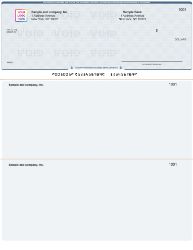
QuickBooks payroll checks from Checkomatic in voucher format , the paper payroll alternative when direct deposit is not available or not preferred.
Funds Available on Pay Date
With direct deposit, the employee's pay is available in their account at the opening of business on pay date or even the night before. The employee does not need to go anywhere, wait for mail, or take any action to access their pay. For employees living paycheck to paycheck, the certainty of funds being available at a specific time on a specific date is a meaningful quality-of-life benefit that paper checks do not provide as reliably.
Lower Per-Transaction Cost at Volume
ACH payroll origination fees are $1.50 to $3.00 per employee per pay period at most banks and payroll processors. There are no check stock costs, no postage, and minimal staff time for distribution. At 20 or more employees processed biweekly, the savings over paper checks become measurable over a full year.
Eliminates Mailing and Distribution Logistics
Direct deposit removes the physical mailing process entirely. Pay arrives in the employee's account regardless of their location. Remote employees, employees at different offices, and employees who travel are paid on the same schedule as in-office staff without any additional distribution effort. Lost check replacement, returned mail tracking, and undelivered paycheck follow-up disappear from your payroll workflow.
Supports Multiple Account Splits
Most direct deposit systems allow employees to split their net pay across multiple accounts. An employee can direct a set amount to a savings account automatically and receive the remainder in their checking account. This built-in budgeting feature is not available with paper payroll checks, where the employee must manually manage any account splitting after cashing or depositing the full check.
Cons of Direct Deposit
Excludes Unbanked Employees
An employee without a bank account cannot receive ACH direct deposit payments. Employers cannot legally force an unbanked employee to open an account in most states. For workforces with any meaningful share of unbanked employees, maintaining a paper payroll check process is not optional. It is the legally required alternative payment method.
State Law Restrictions on Mandatory Direct Deposit
Several states, including California and New York, prohibit employers from requiring all employees to use direct deposit. Even in states that permit mandatory direct deposit, the Electronic Fund Transfer Act requires that the employee be free to choose their own bank. An employer who attempts to force all employees to direct deposit to a specific bank account or payroll card may violate both federal and state wage payment law. Penalties for improper mandatory direct deposit include civil fines and back pay liability.
ACH Reversals Are Not Guaranteed
If a payroll error is discovered after the ACH batch is released, reversing the payment requires the receiving bank to voluntarily return the funds. The receiving bank is not legally obligated to comply. In practice, most banks cooperate with ACH reversal requests when the request is timely and clearly documented, but the process is not as clean or reliable as a stop payment on a paper check. Overpayments that are not reversed require the employer to pursue repayment through other means.
Setup Requires Employee Banking Data Collection
Every employee must complete a direct deposit authorization form providing their routing number, account number, and account type. Collecting, verifying, and storing this banking data creates a data management responsibility. Employees who change banks must submit new authorization forms with enough lead time for the change to take effect before the next payroll. An employee who forgets to update their direct deposit information after changing banks may miss a pay period entirely, triggering a replacement paper check regardless.
Cost Comparison: What Each Method Costs Per Employee
| Cost Component | Paper Payroll Check | Direct Deposit |
|---|---|---|
| Transaction fee | $0.15 to $0.25 (check stock) | $1.50 to $3.00 (ACH fee) |
| Postage (if mailed) | $0.73 per envelope | $0 |
| Staff time (print, sign, distribute) | $2 to $5 per check at typical wage rates | Minimal , batch submission |
| Fully loaded per employee per pay period | $3 to $8 | $1.50 to $3 (plus software subscription) |
| Annual cost, 10 employees biweekly | $1,560 to $4,160 | $780 to $1,560 (plus software) |
| Annual cost, 50 employees biweekly | $7,800 to $20,800 | $3,900 to $7,800 (plus software) |
State Law: When Paper Checks Are Legally Required
This is the most important section for employers considering mandatory direct deposit. Federal law under the Electronic Fund Transfer Act (EFTA) does not prohibit mandatory direct deposit but sets a baseline: you cannot require an employee to use a specific bank. State law in many states goes further.
States That Prohibit Mandatory Direct Deposit
California explicitly prohibits mandatory direct deposit under California Labor Code Section 213. Employers in California must obtain voluntary written consent from each employee before initiating electronic wage payments and must offer a paper check alternative. New York similarly requires voluntary written consent. Indiana, Maryland, New Hampshire, New Jersey, and several other states impose comparable restrictions ranging from consent requirements to outright prohibitions on making direct deposit a condition of employment.
What "Consent Required" Means in Practice
In consent-required states, an employer can offer direct deposit as a convenient option and encourage employees to use it. What the employer cannot do is make direct deposit a condition of employment, fire or discipline an employee who refuses direct deposit, or fail to offer a paper payroll check as an alternative. The employee's choice must be actually voluntary and documented in writing.
For the complete guide to state payroll law requirements and how they affect your payroll check format choices, see business checks for payroll: the complete employer guide.
Unbanked Employees: Why Paper Checks Remain Essential
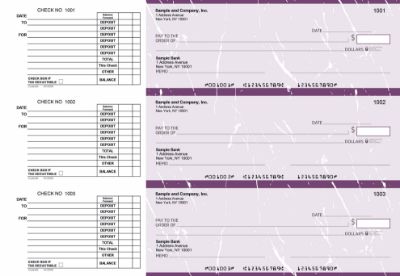
Manual executive deskbook checks from Checkomatic , the practical solution for unbanked employees and small teams that prefer handwritten payroll checks.
According to FDIC data, approximately 4.5 percent of US households were unbanked as of the most recent national survey. The rate is higher in industries that rely heavily on hourly and seasonal workers, including construction, food service, agriculture, and hospitality. For employers in these industries, a meaningful share of their workforce may have no access to ACH direct deposit.
Why Employers Cannot Mandate Bank Account Ownership
An employer cannot legally require an unbanked employee to open a bank account as a condition of employment in most states. Opening a bank account is not always simple for employees with limited credit history, past ChexSystems entries, or immigration status complications. An employer who attempts to enforce this requirement exposes themselves to wage payment law violations and potential discrimination claims.
The Payroll Card Option and Its Limitations
A payroll card is a prepaid debit card loaded with the employee's net pay each period. Some employers use payroll cards as an alternative to paper checks for unbanked employees. Under federal Regulation E, employees must be able to access their full pay without fees at least once per pay period if payroll cards are used. The employee also must consent to receiving pay by payroll card and must have a genuine alternative available if they refuse. In many states, that alternative must be a paper payroll check. Payroll cards eliminate the paper check for some unbanked employees but do not eliminate the requirement to offer paper checks entirely.
For businesses with unbanked employees, paper payroll checks in manual or computer-printed format remain the most simple and universally compliant payment method. For manual check options that work without accounting software, see manual checks at Checkomatic.
The Hybrid Approach: Offering Both
The most practical answer to the payroll check vs direct deposit question for most small and medium-sized businesses is not to choose between them. Offer both and let employees select the method that works for their situation. This approach eliminates the state law compliance risk, covers unbanked employees, satisfies the majority of employees who prefer direct deposit, and maintains the paper check option for employees who prefer it.
How to Implement a Hybrid Payroll System
- Set up ACH direct deposit for every employee who has a bank account and consents in writing.
- Maintain a supply of payroll check stock for employees who do not consent or cannot use direct deposit.
- Process both methods on the same pay date , direct deposit through your payroll software's ACH module and paper checks through the same software's check printing function.
- Document each employee's payment method choice in writing and update it whenever an employee changes their preference.
- Review the employee list at each payroll run to confirm no one has slipped through with a missing or outdated preference on file.
What Accounting Software Handles Both
QuickBooks Payroll handles both direct deposit and paper check printing within the same payroll run. You can process some employees as ACH deposits and print physical checks for others in the same batch. QuickBooks-compatible payroll checks in voucher format from Checkomatic print correctly through QuickBooks Payroll's check printing function and align with double window envelopes for mailing. For QuickBooks-compatible payroll checks, see QuickBooks checks.
Which Is Right for Your Business
| Business Situation | Best Method | Why |
|---|---|---|
| 1 to 5 employees, all banked | Either , employer preference | Cost difference is negligible at this scale |
| Any unbanked employees | Paper check (required) | Direct deposit not available without bank account |
| California or New York employer | Both (mandatory) | State law requires paper check alternative |
| 20+ employees, all banked, consent obtained | Direct deposit primary | Cost and logistics savings meaningful at this scale |
| Field workers, no reliable internet | Paper check | Physical pay stub accessible without portal access |
| Remote employees in multiple states | Direct deposit primary | Eliminates mailing logistics across locations |
| Mixed workforce (some banked, some not) | Both (hybrid) | Cover all employees with their preferred method |
| Payroll error risk is high (complex pay structures) | Paper check | Stop payment available before deposit if error found |
What Customers Say About Checkomatic
All reviews below are published on checkomatic.com and reproduced verbatim. Source: checkomatic.com/quickbooks-starter-pack-product, 4.5 stars from 166 verified reviews.
"Been with them for 15 years. Always reliable, always good quality, good service. What more can you ask for?"
ATV Inc. | ★★★★★ 5/5 | April 5, 2024 | Source: checkomatic.com/quickbooks-starter-pack-product
"First time ordering and I am super impressed with the quality of the checks. No issues with delivery. I will be ordering again!"
TClinton | ★★★★★ 5/5 | April 9, 2025 | Source: checkomatic.com/quickbooks-starter-pack-product
"We use CheckoMatic for all of our check needs! They have great prices and we receive our products in a timely manner!"
CG's Tax Service | ★★★★★ 5/5 | September 18, 2024 | Source: checkomatic.com/quickbooks-starter-pack-product
"I got 500 checks for less than half of what the bank wanted for 200!"
VVA Voucher Checks (Vietnam Veterans of America) | ★★★★★ 5/5 | July 6, 2024 | Source: checkomatic.com/quickbooks-starter-pack-product
"ASJ Wilson Construction has been a client of checkomatic for some years now and they've never disappointed this company. Thank you checkomatic for all that you do."
ASJ Wilson Construction | ★★★★★ 5/5 | June 6, 2024 | Source: checkomatic.com/quickbooks-starter-pack-product
"Affordable and efficient. My go-to business check printer."
Doe | ★★★★★ 5/5 | January 24, 2025 | Source: checkomatic.com/quickbooks-starter-pack-product
Why Choose Checkomatic for Payroll Check Stock
Voucher Format With Pre-Printed Pay Stub Fields
Checkomatic's payroll checks ship in voucher format with pre-printed stub fields for gross pay, deductions, net pay, and year-to-date totals , the exact fields required by most state pay stub laws. These are not generic business checks with blank stubs. They are specifically formatted for payroll compliance. For all payroll check formats, see business checks for payroll: the complete employer guide.
Security Features Standard on Every Payroll Check Order
Every Checkomatic payroll check includes chemically sensitive paper, microprinting, void pantograph, and ANSI-certified MICR encoding as standard. Payroll checks are high-value targets for check washing and counterfeiting because they are issued regularly in predictable amounts. Security check stock significantly reduces this risk. For payroll-specific security considerations, see are business checks safe: security features that actually matter.
Compatible With QuickBooks, Quicken, Sage, and Most Payroll Software
Checkomatic's payroll checks are compatible with QuickBooks Payroll, Quicken, Sage 50, and most other accounting platforms that support check printing. The voucher format prints correctly with the check-on-top layout that QuickBooks defaults to for payroll. No format adjustment needed. For QuickBooks-compatible check formats, see QuickBooks checks. For manual checks for businesses that handwrite payroll, see manual checks.
For Positive Pay Integration
Checkomatic's payroll checks work with positive pay services offered by most US business banks. When your bank's positive pay system compares issued check data against presented checks, having consistently formatted MICR-encoded check stock eliminates the encoding errors that cause false rejections. For the complete guide to positive pay as a payroll fraud prevention tool, see what is positive pay and how does it work. To order payroll check stock in the right format and quantity, see what is the best place to order checks online.